How do you choose the right surface treatment for your project?
In the mechanical manufacturing sector, choosing the right surface treatment is essential to ensure the performance and durability of the parts produced.
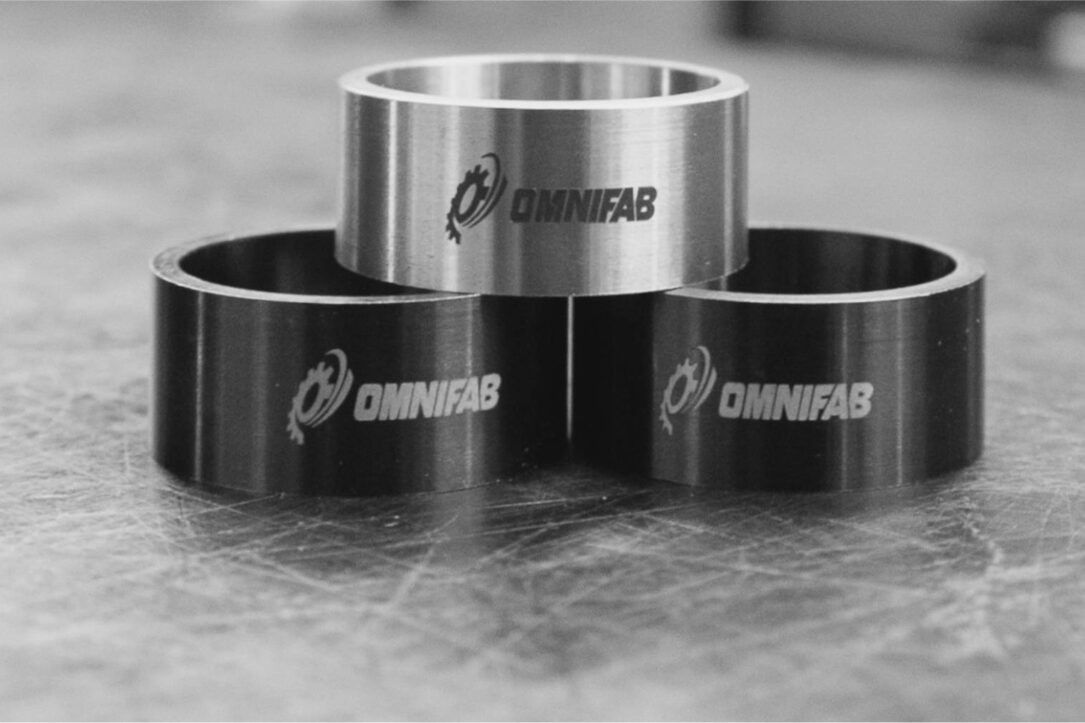
Although Omnifab does not specialize in surface treatments (except for black oxidation), our extensive experience in producing various industrial components allows us to confidently address this related topic.
In the following paragraphs, you will discover the different types of surface treatments available and the factors to consider when choosing the most appropriate one for your parts.
What is a surface treatment?
A surface treatment is a process (mechanical, physical, chemical or electrochemical) applied to the surface of a material, usually a metal, to modify its mechanical, physical, chemical or aesthetic properties without altering its internal structure.
What are surface treatments used for?
Surface treatments are essential in many industries due to their wide range of applications. Here are just some of the reasons why mechanical parts may be treated.
- To increase resistance to corrosion, wear, heat and fatigue
- Improving adhesion for coatings, paints or adhesives
- Prepare surfaces for other processes such as chemical or physical coatings
- Optimise the mechanical performance of a part (abrasion resistance, surface hardness)
- Protect against chemical aggression or extreme environments
- Enhance material aesthetics (shiny, coloured or textured finishes)
- Ease surface maintenance and cleaning
- Make certain surfaces conductive or insulating as required
The different types of surface treatment
There are many surface treatments, which can be grouped into four main categories.
1 – Mechanical or thermal structural transformation treatments
These treatments modify the mechanical properties of the surface metal by changing its structure, either by mechanical processes or by the application of heat.
Shot Blasting
A process in which abrasive particles are projected at high velocity onto the surface of a material to strengthen its structure, improve its fatigue resistance, and clean surfaces by removing impurities.
Roller burnishing
Technique in which the surface of a metal is compressed with rollers or rolls, increasing hardness and reducing roughness to improve resistance to wear and fatigue.
Mechanical burnishing
A process that smoothes and polishes the surface of metal by compressing it with special tools, producing a smooth, shiny finish while improving the mechanical properties of the surface.
Deburring
The process of removing burrs, or excess material left behind after machining or cutting operations, to make the surface smooth and ready for further processing.
Sandblasting
A surface cleaning process that uses abrasive blasting to remove rust, paint or other contaminants while producing a uniform texture ready for coating.
Bead blasting
A variation of sandblasting that uses fine glass beads instead of sand for a softer effect and to clean delicate surfaces without damaging the base material.
Polishing
The process of refining the surface of metal using fine abrasives to produce a smooth, shiny finish, often used for aesthetic reasons and to reduce friction.
Low-pressure abrasive cleaning (dry or wet)
Low-pressure surface cleaning techniques using mild abrasives (air scrubbing) or a mixture of water and abrasive (water scrubbing), ideal for gently cleaning surfaces without damaging them.
Quenching
A process in which a metal is heated to a high temperature followed by controlled cooling to modify its mechanical properties by changing the microstructure of the material, which can increase the hardness and tensile strength of its surface.
Comparison table – Mechanical or Thermal Structural Transformation Treatments
| Treatment | Process Description | Key Benefits | Typical Applications |
| Shot Blasting | Abrasive particles are projected at high speed onto the surface | Improves fatigue resistance, cleans and strengthens surface | Structural parts, surface preparation before coating |
| Roller burnishing | Surface is compressed using rollers to smooth and harden it | Increases hardness, reduces roughness, improves wear resistance | Precision mechanical components |
| Mechanical burnishing | Surface is polished by controlled compression tools | Smooth, shiny finish, improved surface properties | Aesthetic and functional metal parts |
| Deburring | Removes sharp edges and excess material after machining | Improves safety, fit and surface quality | Machined or cut parts |
| Sandblasting | Abrasive blasting using sand to clean surfaces | Removes rust, paint, contaminants | Surface preparation, industrial cleaning |
| Bead blasting | Uses fine glass beads instead of sand | Gentle cleaning, uniform matte finish | Delicate or precision components |
| Polishing | Uses fine abrasives to refine surface finish | High-gloss finish, reduced friction | Decorative and precision parts |
| Low-pressure abrasive cleaning (dry/wet) | Gentle abrasive cleaning with air or water mixture | Non-damaging cleaning method | Sensitive materials, restoration work |
| Quenching | Heating followed by rapid cooling | Increases hardness and tensile strength | Heat-treated steel components |
2 – Thermochemical or diffusion treatments
These processes involve the diffusion of chemical elements into the metal under the influence of heat to improve its surface properties, such as hardness or corrosion resistance.
Carburizing
A process in which the metal is exposed to a high temperature carbon source, allowing the carbon to diffuse into the surface to increase hardness and wear resistance while maintaining internal ductility.
Nitriding
Treatment in which nitrogen is diffused into the surface of a metal at high temperatures. This increases surface hardness, wear resistance and corrosion resistance while providing good mechanical strength.
Carbonitriding
A combination of carburizing and nitriding in which the metal is exposed to gases containing carbon and nitrogen. This improves both surface hardness and corrosion resistance, ideal for high-stress parts.
Boriding
A treatment in which the metal is exposed to high temperatures in the presence of boron, allowing the boron to diffuse into the surface. This improves hardness and wear resistance while providing better corrosion protection.
Sulfurization
The process of introducing sulfur into the metal surface at elevated temperatures to form a sulfide layer that increases wear resistance and reduces friction, which is particularly useful for moving mechanical components.
Comparison table – Thermochemical or Diffusion Treatments
| Treatment | Process Description | Key Benefits | Typical Applications |
| Carburizing | Carbon diffuses into heated metal surface | High surface hardness, wear resistance | Gears, mechanical parts |
| Nitriding | Nitrogen diffuses into metal surface | High hardness, corrosion resistance | High-performance mechanical components |
| Carbonitriding | Carbon and nitrogen diffusion combined | Balanced hardness and durability | High-stress industrial parts |
| Boriding | Boron diffusion into metal at high temperature | Extreme hardness and wear resistance | Heavy-duty industrial tooling |
| Sulfurization | Sulfur forms a surface sulfide layer | Reduced friction, improved wear resistance | Moving mechanical assemblies |
Let our team deliver custom parts designed to meet your needs!

3 – Conversion treatments
These treatments convert the metal surface into a protective layer through chemical reactions. They improve corrosion resistance or provide a base for subsequent coatings.
Chemical Burnishing (also called chemical blackening and Black Oxide treatment)
Unlike mechanical burnishing, chemical burnishing is a controlled oxidation process that produces a thin layer of black oxide on the surface of steels, giving them an aesthetically pleasing deep black appearance. This black oxidation treatment also provides some protection against corrosion, especially when the black oxide layer is subsequently impregnated with oil or wax. It can also contribute to better lubrication of the treated part.
Passivation
Chemical treatment that forms a protective oxide layer on the surface of metals such as stainless steel. Passivation increases corrosion resistance and reduces oxidation, thereby extending the life of the material.
Anodizing
An electrochemical process that creates an oxide layer on the surface of metals, primarily aluminum. This layer improves corrosion resistance, increases paint adhesion and can be tinted for an aesthetic finish.
Phosphating
Chemical treatment that forms a phosphate layer on the surface of ferrous metals, improving corrosion resistance and paint adhesion. It is often used as a pretreatment prior to painting.
Anodic Oxidation
A process that uses electrolytes to create a thick oxide layer on metals such as aluminum and titanium. This treatment improves corrosion resistance and hardness, and can also be used as a base for coloring.
Chemical Deposit Conversion
A process that applies a conversion coating using chemical solutions to create a protective layer on the surface of metals. This treatment is often used on ferrous metals to improve their corrosion resistance.
Comparison table – Conversion Treatments
| Treatment | Process Description | Key Benefits | Typical Applications |
| Chemical burnishing / Black oxide | Controlled oxidation forms black oxide layer | Corrosion resistance, lubrication, aesthetic finish | Steel parts, precision components |
| Passivation | Forms protective oxide layer on stainless steel | Corrosion resistance, longer lifespan | Stainless steel parts |
| Anodizing | Electrochemical oxide layer on aluminum | Corrosion protection, color options | Aluminum components |
| Phosphating | Forms phosphate layer on ferrous metals | Paint adhesion, corrosion resistance | Pre-paint steel treatment |
| Anodic oxidation | Thick oxide layer via electrolysis | Hardness, corrosion resistance | Aluminum, titanium parts |
| Chemical deposit conversion | Chemical protective conversion layer | Corrosion resistance base layer | Industrial steel components |
4 – Coatings (physical and chemical)
Coatings are the application of an additional layer of material to metal, either by physical or chemical processes, to improve properties such as corrosion resistance or aesthetics.
Physical Vapor Deposition (PVD)
Vacuum coating method in which solid materials are vaporized and deposited as a thin film on the surface of a metal. This treatment improves hardness, wear resistance and provides an aesthetic finish.
Chemical Vapor Deposition (CVD)
A process similar to PVD, but using chemical reactions to deposit thin films on the surface of materials. This produces highly adherent, often higher-quality coatings used in high-tech applications.
Galvanization (sometimes called zinc plating)
A conversion treatment technique in which a layer of zinc is deposited on the surface of a metal (usually steel) to protect against corrosion. Galvanization can be carried out by hot dip or electrolysis.
Chrome plating
Application of a chromium layer to the surface of a metal to provide corrosion protection, aesthetic enhancement and wear resistance. Chromium plating can be carried out by electrolysis (electrolytic chromium plating) or chemically.
Nickel plating
The technique of applying a layer of nickel to a metal, which improves appearance and corrosion resistance, while offering good protection against wear. Nickel can be applied electrolytically or chemically.
Electrostatic painting
A coating method in which paint is sprayed onto the surface of a statically charged material. This ensures uniform coverage and improves adhesion, offering both corrosion protection and an aesthetic finish.
Thermosetting powder coatings
A process whereby powder paint particles are applied to the surface of a metal, then cured by heat. This “baked-on paint” creates a durable, impact-, corrosion- and chemical-resistant coating.
Polyurethane coating
Application of a polyurethane coating to provide excellent protection against impact, wear and chemicals. This coating is often used in industrial environments and for surfaces exposed to harsh conditions.
Comparison table – Coatings (Physical & Chemical)
| Treatment | Process Description | Key Benefits | Typical Applications |
| PVD (Physical Vapor Deposition) | Thin film deposited in vacuum | High hardness, wear resistance, aesthetic finish | High-end mechanical parts |
| CVD (Chemical Vapor Deposition) | Chemical reaction deposits thin film | Very strong adhesion, high performance | Aerospace, advanced tooling |
| Galvanization | Zinc layer applied to steel | Strong corrosion protection | Structural steel, outdoor parts |
| Chrome plating | Chromium coating applied | Wear resistance, decorative finish | Mechanical and aesthetic components |
| Nickel plating | Nickel coating applied | Corrosion resistance, durability | Industrial parts, machinery |
| Electrostatic painting | Charged paint particles applied evenly | Uniform finish, corrosion protection | Industrial equipment |
| Thermosetting powder coating | Powder cured by heat | Impact resistance, durability | Industrial structures |
| Polyurethane coating | Protective polymer layer | Chemical and impact resistance | Harsh environments, machinery |
Factors to Consider When Selecting the Right Surface Treatment
When it comes to selecting the right surface treatment for a specific application, there are several key factors to consider:
Desired properties (wear resistance, corrosion, aesthetics)
It is important to define the specific properties that the surface treatment must provide.
For example, for parts subject to high friction, a treatment such as chemical burnishing or nickel plating may be preferred because of their excellent wear resistance.
If corrosion protection is a priority, treatments such as galvanizing are often chosen for their ability to create an effective barrier against moisture and corrosive agents.
For applications where appearance is important, such as in the transportation and construction industries, physical vapor deposition (PVD) finishes or powder coatings can provide options that are both aesthetically pleasing and protective.
Environmental conditions (moisture, chemicals, extreme temperatures)
The conditions in which treated parts will be used also influence the choice of surface treatment. Humid environments or those exposed to aggressive chemicals may require treatments specifically designed to withstand these challenges. For example, treatments such as passivation for stainless steel may be particularly effective in corrosive environments.
Similarly, parts intended for high-temperature applications, such as those used in the aerospace or automotive industries, may require thermally resistant coatings, such as chemical vapor deposition (CVD) treatments.
Cost and Durability of Treatments
Finally, it’s important to consider the cost effectiveness of the chosen treatment. Some treatments, although more expensive initially, can provide superior life and performance, thus reducing long-term maintenance costs.
For example, chrome plating or anodizing may have a higher initial investment, but their ability to extend part life can offset this cost by saving on frequent replacements. A thorough total cost of ownership (TCO) analysis can help evaluate the economic benefits over the life of the product.
For customized mechanical parts, contact Omnifab
In short, the choice of surface treatment is a critical step in optimizing the performance of your mechanical parts.
In addition to offering black oxidation treatment, we can also assist you in selecting the surface treatments best suited for your applications.
Contact us to learn more about our ability to quickly deliver the mechanical parts you need.